The free Museum of Modern Art (Musée d’Art Moderne de Paris) offers an easy way to see 20th-century and contemporary art inside the Palais de Tokyo. Its standout murals by Matisse and Dufy alone make it worth a detour, and the permanent collection can be enjoyed without tickets or reservations.
A Municipal Museum in an Art Deco Landmark
The Museum of Modern Art occupies half of the Palais de Tokyo, a 1937 Art Deco building originally created for the Exposition Internationale des Arts et des Techniques. The architecture, from the bronze doors to the sculpted metopes, is part of the visit and freely accessible.
This municipal museum covers the same period as the national Pompidou (closed for renovation until the 2030s), while the neighboring wing of the Palais de Tokyo features large-scale contemporary art projects (admission charged).
Admission to the permanent collection of the Musée d’Art Moderne, on the lower level, is free and without time-slot reservations. The two upper floors host temporary exhibitions with paid admission — advance tickets are often required.

Two Unmissable Highlights
Most visitors start with the two dedicated halls near the museum entrances: the Salle Raoul Dufy and the Salle Henri Matisse. Both showcase monumental works created for international projects of the 1930s.
Raoul Dufy: La Fée Électricité

Dufy’s La Fée Électricité (The Spirit of Electricity, 1937) is one of the most striking artworks in Paris. Commissioned by an electricity company for the 1937 exhibition, the work stretches across a curved 60-meter hall. Dufy painted 250 plywood panels—each about 6½ × 4 feet—using nearly 1,100 pounds of paint to create more than 6,450 square feet of imagery.
The fresco runs from right to left. It begins with myth, early agriculture, and slow technological change. In the central blue section, Hermes delivers electricity from the gods to humanity.
The final scenes, bathed in electric light, celebrate modern progress and the scientists who made it possible. Here, Iris, the fairy (La Fée), after whom the painting was later named, brings light to around 50 world cities.
The oval room enhances the sweep of the composition, and modern seating by Johan Creten encourages visitors to pause. (Access the free virtual guide.) The Salle Dufy is one level above the entrance, close to the cloakroom.

Henri Matisse: The Dance Murals
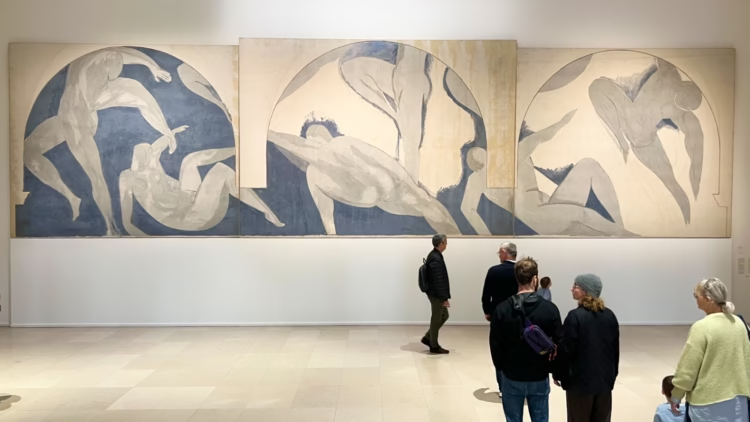
The Salle Henri Matisse presents two large studies for Matisse’s mural project commissioned by the Barnes Foundation in Pennsylvania: La Danse inachevée (Unfinished Dance, 1931) and La Danse de Paris (1933).
Matisse first created La Danse inachevée by sketching eight figures with charcoal taped to a long bamboo and painting them in grey on a blue ground. At roughly 12 × 42 feet, the work proved difficult to handle and was rolled up and forgotten until 1992.
The artist reworked the concept several times. The definitive version for the Barnes Foundation, completed in 1933, became La Danse de Merion. Back in Paris, Matisse adapted an earlier canvas into La Danse de Paris, reducing the number of dancers to six and adjusting the background colours. It has been on view in the museum since 1937.
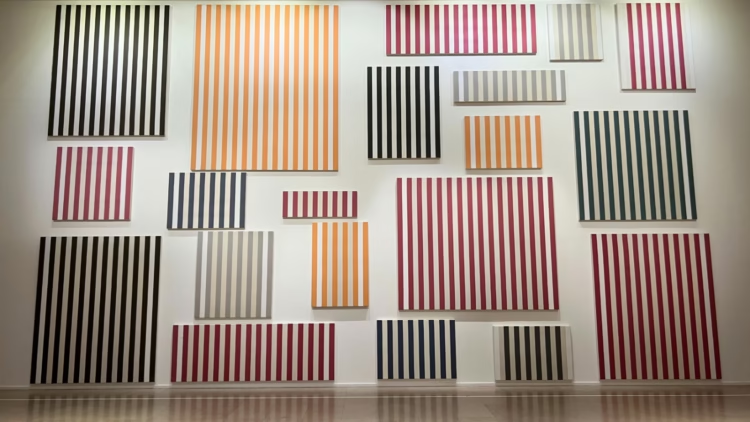
Opposite it, Daniel Buren’s Mur de peintures displays twenty striped panels produced between 1966 and 1977.
This room is located one level below the main entrance.
Exploring the Permanent Collection Galleries
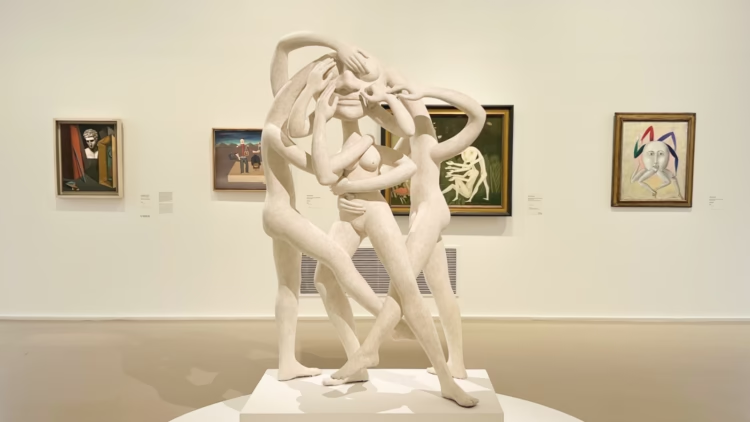
The free permanent collection on level 2 mixes early-20th-century modernism with smaller rooms of contemporary art. Many pieces were donated by Parisians, and although the museum holds works by major artists, it encourages relaxed wandering rather than hunting for specific masterpieces. The free museum app includes short themed tours.
Color and Early 20th-Century Art in Paris

A quote by Matisse—“Colour above all, perhaps more than drawing, is a liberation”—captures the feel of the pre-war galleries. Visitors will see vivid works by Robert and Sonia Delaunay, Pierre Bonnard, Raoul Dufy, Fernand Léger, André Derain, Georges Braque, and Picasso, who is more extensively represented at the Picasso Museum.
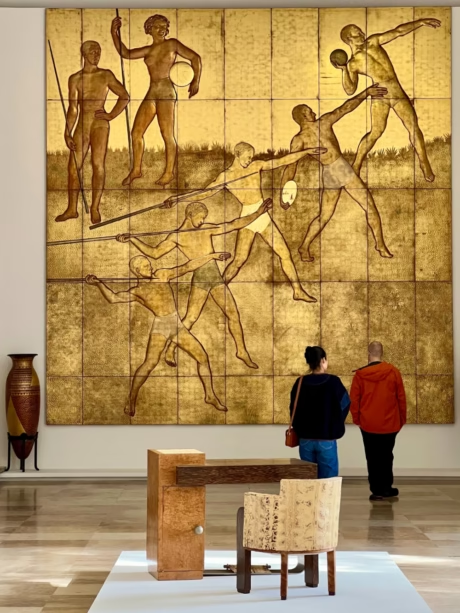
Jean Dunand’s Art Deco panels Les Sports (The Sports, 1935), inspired by the Olympic Games, are among the most striking works in this section.
Sculptures and Post-War Works

The museum’s sculptures include copies of Picasso’s Le Fou (1905), Maillol’s Pomone (1937), Brauner’s Congloméros (1945), and Louise Bourgeois’s large Spider (1995).
Post-war pieces often use sharper lines and quieter colours, as seen in Niki de Saint Phalle’s Notre-Dame de Paris (1962), a subdued contrast to her colorful Nanas and the Stravinsky Fountain sculptures at the Pompidou.
A small rotation of contemporary works adds variety. For large installations, visit the national Palais de Tokyo across the courtyard.
Where This Museum Fits in the Paris Art Scene
The Musée d’Art Moderne focuses on 20th-century works owned by the city. (The national Pompidou covers the same period but is closed until the 2030s.) The adjacent national Palais de Tokyo presents international contemporary art.
The Musée d’Orsay shows 19th-century art, including the world’s largest Impressionist collection. The Louvre covers global art from antiquity to the early 1800s.
Specialized museums in Paris offer focused experiences. They are a joy to visit and often less crowded than the major venues. Visit:
- The Cluny Museum for medieval art;
- The Marmottan Museum for the world’s largest collection of Monet paintings, including Impression, Sunrise; and
- The Orangerie for Monet’s vast water-lily paintings.
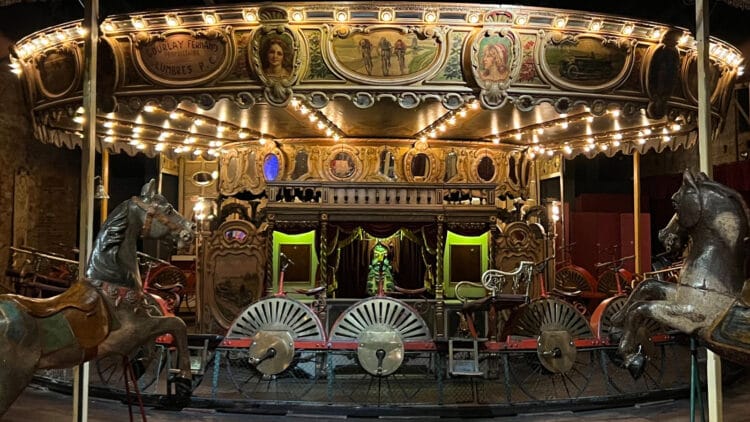
Single-artist museums such as Picasso, Rodin, and the free Bourdelle Museum are also good choices for top art exhibitions. For something playful, the Museum of Fairground Arts in Bercy is another favourite.

Practical Visiting Information
The free permanent collection of the Modern Art Museum (Musée d’Art Moderne de Paris) is open 10:00–18:00 from Tuesday to Sunday. Temporary exhibitions generally remain open until 21:30 on Thursdays.
Getting There
The Musée d’Art Moderne de Paris, 11 Avenue du Président Wilson, occupies the eastern half of the Palais de Tokyo. The nearest métro stations are Alma-Marceau and Iéna on line 9. The Musée Marmottan Monet is also on this line, near La Muette.